分类: Design Research

  • From user insight to prototype: A reflective design journey

    At the end of the module, we need to present our final prototype and design process. there was a lot to do and the module was very tight so it was important to have a proper plan. From the start to the end of the design process, it took about 3 weeks. The complete process was divided into the following stages: user and contextual research, sketching, prototyping, testing, feedback and final presentation.

    For the user research, she brought some walking sticks to our studio and had a conversation with us for about 20 minutes in the first meeting, which was mainly about her views on walking sticks as a user. The second meeting with the mentor was at her place. We took a bus to her house and this time we were more interested in learning about her daily life.

    After finishing our engagement with the mentor, we as a group shared our notes to ensure that we were getting the same information. I spent a lot of time on organising my notes as they were not detailed enough. I organised all my notes and extracted the key information and tried to create a persona page. Once the persona was completed, I had the idea to design a transparent walking stick. To better reflect her identity, I drew some sketches with reference to objects that were meaningful to her and her personal preferences. She also told the story behind those objects which were unique to her.

    During the prototype phase, I had to use rendering software at the end to help me express my final ideas. I originally wanted to make a transparent walking stick, but that didn’t work out at the mould-making stage, so I had to use wood instead. Besides, I didn’t have time to show the prototypes to my mentor because the models were finished so late, so I had to revise the prototypes according to my own experience.

    I was generally happy with the design journey but disappointed that my ideas were not finally presented in full physical form. I was too worried about failing to complete the project, so I gave up on making a transparent cane from resin after only one attempt. However, I found that my classmates were very good at presenting ideas using a variety of materials and documenting the process, and I really appreciated their approach to design, which I had not been exposed to before.

    The good aspect of my design journey was the fact that I completed relatively good quality work by the deadline and expressed my ideas in full through the presentation. In addition, the communication with my supervisor went very well and I gained a lot of useful information. The downside was the lack of design details and the fact that the model wasn’t made from transparent materials.

    I think the reason for the successful delivery of the project was making a schedule, evaluating the workload and predicting the point at which I would finish.

    It was good to work with our mentor as we both respected each other’s feelings. In terms of design research ethics, we needed to show respect, responsibility and honesty to our interviewees. We always get her permission before recording or taking photographs, as we know that this is very private information. Also, we didn’t want to bother our mentor too much and wanted to make her feel at ease. Although she said she could drive to the school, we understood that it was not wise to let an elderly person drive alone so we took a bus to get there.

    The reason for the lack of design details was due to not doing in-depth identity research and design on one particular element after doing the interviews. I think it was not enough to reflect the connection of the cane to my mentor and lacked original design elements.

    I didn’t end up with a transparent cane due to my unfamiliarity with the materials and making methods. I needed to understand the different materials and consider which would suit me better in terms of crafting time and appearance.

    In conclusion, I learned how to conduct the user research method and how to engage with the user. However, I need to learn how to do intensive design research. Also, note-taking is the most important skill throughout the research phase. Moreover, I will improve my ability to craft things and explore different workshops. Making and testing it myself is the methodology I have learned.

    When I return to work, I will apply these gains.

    1. Genuine understanding of the user.
    2. Taking notes at all times.
    3. Keep making and testing.
    4. Skilled presentations need constant practice.
  • Heuristic evaluation of a website and reflection of learning experience

    Heuristic evaluation is a method that requires specialists to analyse and provide feedback on user interfaces according to the list of heuristics (Jackson & Cheng, 2018). I will use this method to evaluate the interactive design of the website. All Access Life is a website showcasing adaptive products, which allow disabled people to live the best life. I spent around 15 minutes browsing and interacting with it.

    The advantage of this website is that it provides accessibility tools to improve the interactive experience of special groups of people. The website is likely to be visited by a large proportion of people with disabilities and the designers have taken this into account. General websites also have accessibility aids, but this one places them in a prominent position, which makes it easier for people to use. I think the designer applies the 7th Usability Heuristic, ‘Flexibility and efficiency of use.’

    Moreover, the website creates a good Visibility of system status. When I pressed the respective buttons in the accessibility toolbox, the page informed me of the current status. I think it is important to clearly list the functions that the user is using. There are at least 15 options in the toolbox and the user may enable multiple functions. If the system doesn’t display it, the user may not be able to identify which function is being used.

    Another good aspect of this website is that the product categories are named according to familiar terms, making it easier for users to find their products. If medical terms were used, it might be difficult for users to understand and they might need to consult a dictionary. In addition, the website has given each category an easily recognisable icon, which gives the user a more intuitive feel. I believe the website meets the second and seven heuristics, ‘Match between system and the real world’ and ‘Consistency and standards.’

    The problem with the design of this website is that it doesn’t make it obvious to the viewer that this is a shopping site. Although the site was designed with the user group in mind, the layout of the website was confusing and I couldn’t quickly understand the intent of the website. In my opinion, there is no big difference between All Access Life and Amazon, they are both online shopping platforms. The difference lies in the fact that the target user of All Access Life is disabled people. According to the Usability Heuristics, I think they didn’t work well in terms of Aesthetic and minimalist design.

    Reflection

    I have learned the history of Human factors and used the method to evaluate the website. I learned that ergonomics was developed during the Second World War. The example of ill consideration of Human Factors is interesting, the designer can ignore the usability of products when he is famous enough. Also, I am interested in Checklists, this can reduce our chances of making a mistake. Before learning ergonomics, I couldn’t reasonably tell what was good interaction design. In my previous job, people did not deliberately mention HF, but they did consider it when designing.

    I enjoy learning about Human Factors and Nielsen-Molich heuristics. I think this method is very helpful when I design products, whether they are physical or virtual. I can constantly review the soundness of the design by following these 10 rules during the design process. We have only had a brief introduction to Human factors, but it is important to build this awareness of HF.

    I will use Nielsen-Molich heuristics to analyse products in the future. In addition, I will explore different human factors methods, such as checklists. I can create my own checklist to avoid errors when working on multiple projects. Finally, combining theory with practice is very important in practical work, which can deepen the understanding of Human Factors.

    Bibliography

    Jackson, F. and Cheng, L. (2018) ‘UX in practice: Applying a heuristic evaluation technique to real world challenges,’ Proceedings of the Human Factors and Ergonomics Society Annual Meeting, 62(1), pp. 702–703.

  • Design tools (and Drawing) that support empathic design

    The design brief of this module is designing a walking stick with our mentor. In the user research stage, I used design tools that I learned in a lecture on Design in Empathy. The design tools we used include communication, experience, observation and workshop. Moreover, creating a persona contributes to building a vivid user image. In this journal, I will reflect on my research process as well as my experiences.

    The first time we met her was in our product design studio. We have been introduced to our mentor in a 2-hour meeting. She came with a parcel of walking sticks and told the story of her personal experiences of using walking sticks and her physical health problems. Also, she described the pros and cons of each cane. Each cane has a different appearance and function as well as the story behind them. I used the technique of note-talking while she was speaking. Honestly, I missed some key information, so I had to ask my classmate to share the note with me.

    The second time we met her was at her home. To conduct further research, my group and I decided to go to her place which is Crail. Firstly, we sent her an email with some basic questions and asked her about available time to meet. Before going to her house, we had to choose activities that we want to work on with her and specific questions to ask her. We brought some color samples, which can help us understand colors and combinations she likes. We also brought a few handles of different shapes and sizes, which she could experience to tell us which ones fit best and where we could improve. However, we did not prepare the questionnaire because this might make the interviewee feel uncomfortable and the interviewee might not give real answers.

    We arrived at the village she lives in, and then walk around the place. It is a small village close to the seashore and peaceful. We were walking along the seashore and experiencing her living environment. We met her at the appointed time and we started our informal user research. We chatted about life and our experience in moving to Dundee. Then we took out color samples and handles we prepared and asked for permission to record the conversation. we discussed the design of different canes and her favorite one. Besides, she described her usage scenarios and feelings. We found that she did not use the cane at home. After the workshop, she showed us around the house and introduced some favorite ornaments. She showed some of her grandchildren’s drawings and clothes. We saw the lovely greenhouse and her cat in the small garden. Meanwhile, I took a lot of pictures while touring her home and interviewing her.

    I felt satisfied with this research trip because engaging with our mentor enabled me to put myself in the user’s shoes. Going to the users’ place of living is a genuine user research process, and I can have empathy with users. I like taking photos because it is an efficient way to record the whole process. Also, Drawing is a good method to illustrate the function of the cane but I felt quite hard to sketch a person in a short amount of time.

    The visit lasted almost 3 hours and I gained a lot of information, but the visit was conducted without a frame. This can result in not getting valid information in a short interview or workshop. Also, I found that it was not easy to take notes on-site as we were talking and making. Key points were not recorded in my notebook. Lastly, an informal interview allows the interviewee to feel relaxed, while it is possible to miss the important questions.

    I think the reason that we don’t structure the activity is that we don’t want the interviewee to feel pressured. I searched through an article on an unstructured interview and found some useful instructions. Listing the general topics or questions and a basic script in an interview guide. Giving people an overview of plans (Wilson, 2014). I think it is a useful method for me to plan and develop the interview. Although this is an unstructured interview, I should list my question and plan.

    In conclusion, I have learnt how to conduct user research through empathic techniques. Interviews, observation, experience and workshops are useful tools in the research phase, and then I can use persona, drawing, photograph and note-taking to present my research process. It is important to classify which questions can be asked by email and which activities should be conducted face-to-face.

    When I am working on user research in the future, I will list the questions and print the materials before the interview. This can ensure that the interview stays on topic and covers all the questions. Secondly, I will use different kinds of co-design workshops and clarify the purpose of the workshops. Thirdly, dividing the work can make the whole process more efficient when we work as a group. Overall, empathy in design is an efficient user-centred design method which can help designers to gain insight into users.

    Bibliography

    Wilson, C. (2014) Interview techniques for UX practitioners: A user-centered design method. Waltham, MA: Morgan Kaufmann.

  • Difference between Universal design, Inclusive design and Accessibility

    Recently, I am attending the changing population module. In this module, I have learned that universal design is developed from accessibility. Also, I have learned Inclusive design which is the design of products or services that are usable by as many people as possible. These specific products or services have their target users. Identifying the differences between these concepts is important, which teaches me how to use methodologies to solve practical problems. In this journal, I will mainly discuss the difference between universal design, inclusive design and accessibility.

    To give a coherent explanation of universal design, inclusive design and accessibility, I should recap the development of the population. People are living longer today because of a healthy lifestyle, medicine and sanitation, but there were an increasing number of the ageing population and disabled people (Universal design history, no date). This situation aroused awareness of inequities in access to public places and products for the elderly and disabled. The US government began to pass the Americans with Disabilities Act and the Architectural Barriers Act. Accessibility primarily addresses the need of disabled people and remove the barrier to accessing the buildings.

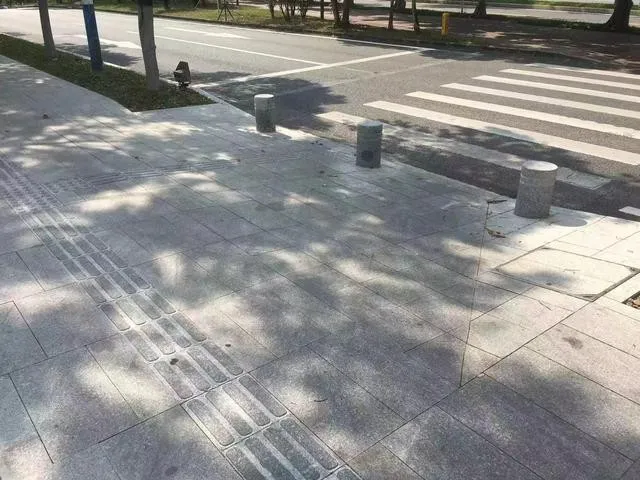
    However, the disadvantage of those accessible designs and “customized designs” are expensive and inaesthetic. The worst thing was that people unconsciously reinforce the bias of disability.  The concept of Universal design was created to solve this problem. The universal design definition is ‘‘The design of products and environments to be usable by all people, to the greatest extent possible, without the need for adaptation or specialized design’’ (Persson et al., 2014). Universal design broadens the scope of functionality of the design and breaks the boundary of the type of people. It is designed for all users. I quickly realized that universal design is around the place where I live. The design of pedestrians is not for the wheelchair but also for cyclists.
    Figure 1

    Inclusive design is similar to universal design to some extent as they do not solely focus on disability but on diverse groups (Persson et al., 2014). Nevertheless, inclusive design has its root in product design and mainly serve the target market users (Inclusive Design Toolkit, no date). The concept of inclusive design is applied to the mobile phone industry and helps the company win a huge market share. For example, Transsion, a manufacturer of mobile phones, designed AI cameras to better capture dark-skinner users. They introduced “the beauty of blackness” to their consumers. (Avle, 2022).
    Figure 2

    In conclusion, universal design is designed for all, while inclusive design emphasizes the segmented user market. Accessibility mainly focuses on disability.

    Reflection

    At the beginning of these lectures, I try to recall what I learned in my undergraduate and the keywords that come to my mind are elder people, accessible and wheelchairs. After the lectures, I found difficulty in distinguishing between universal design, inclusive and accessibility. Besides, both lectures talked about ageing and disability which were mentioned frequently so I just formed a stereotype in my mind. Are these three terms the same concept?

    I felt confused with the definitions because universal design, inclusive design and accessibility are all related to disability and the three concepts may have historical relevance and I did not understand the development history of these concepts.

    I think the reason I confused these 3 definitions is that I didn’t know the story behind them. By studying history, I can understand the development of different concepts more clearly. Looking back, I feel that learning histories can help me link the separate events and build a holistic view. However, it is not conducive to using design methods in practice if they are not combined with my own life experiences.

    In summary, I learned that reviewing history is beneficial to understanding a concept deeply. Also, don’t just focus on theory, sometimes think outside the box. Lastly, I will observe life well and use these design methods flexibly.

    In the future, I will do a comparative analysis to find out how they are related, listing the similarities and differences, when faced with knowledge of similar concepts. Also, I will take these methodologies into account when designing products in real-world projects.

    Bibliography

    Universal design history: RL Mace universal design institute (no date) UDI. Available at: https://www.udinstitute.org/ud-history (Accessed: November 29, 2022).

    Persson, H. et al. (2014) ‘Universal design, inclusive design, accessible design, design for all: Different concepts—one goal? on the concept of accessibility—historical, methodological and philosophical aspects,’ Universal Access in the Information Society, 14(4), pp. 505–526.

    Avle, S. (2022) ‘Hardware and data in the platform era: Chinese smartphones in Africa,’ Media, Culture & Society, 44(8), pp. 1473–1489.

  • “Co-design is a genuine process of collaboration with people”, An interview with Designer Linsey. M

    “Co-design is a genuine process of collaboration with people”, An interview with Designer Linsey. M

    The idea of Co-design has been frequently mentioned and applied in a wide range of design activities, such as Interior & environmental, business, public health, public service and government sector. Co is the abbreviation of collaborative, which literally means that people work together in a design process to complete a design task or relevant project. In this context, participants who are not educated as designers, and may from different backgrounds and having different voices, representing a variety of interests. In the book Massive Collaborative Design describes that this practice has a name called “participatory design” and has been around for 40 years.

    User-centred design method and participatory method are two different approaches that were applied in the design process. According to the book, codesign is considered a combination of both design approaches. In the first method, designers will conduct observation and research through interviews and user is considered an “object of study”. The second method, users will play a major role in the design process from beginning to the end as they are deemed to be “experts of their experience”.

    Co-design has different methodologies and meanings in different settings. I had the pleasure of interviewing Linsey McIntosh who teaches Interior & Environmental Design, Design & Making at The Duncan of Jordanstone College of Art & Design, University of Dundee, and Linsey shared some personal views from a designer’s perspective on codesign and experiences in real-world projects. In terms of the meaning of co-design, designer Linsey Mclntosh said that co-design is a genuine process of collaboration with people. It is designing with people rather than designing for them. The role of the designer is different from what we normally understand. Designer should work with the people or groups and invite them into to the collaborative process as well as keep them engage in the whole process. Linsey points out, is that engagement is a very small part of the process, she describes that it is just like a little nugget in the grand scheme of things. A series of hands-on workshops that can keep people engage in the whole process according to Linsey, but it depends on the type of project and partner, she emphasized that there is no one size fits all. This is based on project scale, budget and time.

    There is a special project, Union Street, that Linsey McIntosh and her colleague Gary Kennedy have been working with UNESCO city of design Dundee. According to the project introduction, Union Street was temporarily pedestrianized during the COVID. The temporary renovation measures were considered successful. People found that it was helpful to the business, and decided to convert the project to a permanent one, and better create the local community which is more inclusive, safer, attractive and healthier through co-design.
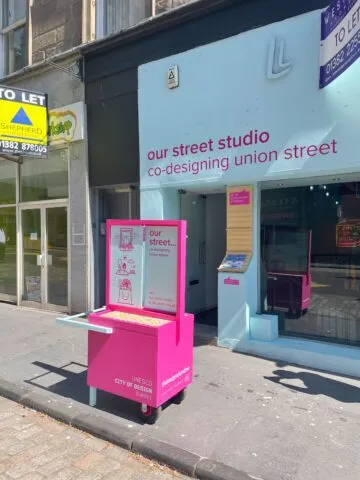
    codesign1codesign2
    Co-design studio (Wallace, 2022)

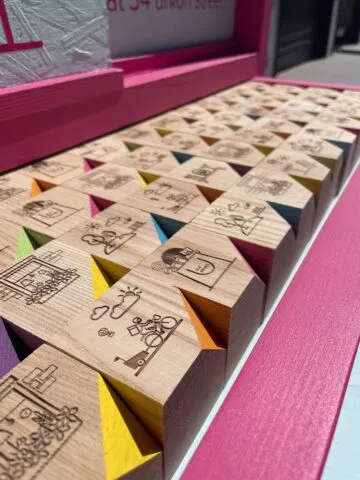
    The Union Street project was a challenge for designers because typically the participants were a select group of people in other co-design projects. And on the public street, you don’t know who will go into the door and get involved. Linsey introduced a cart to us, which is quite interesting and show how they invite people in “our street studio”. Linsey and her colleague Gary went round with a cart to visit different stores and this cart has attracted the attention of local residents and tourists. Linsey said that they had all these little blocks made and call them the building blocks of the project. Each block has small icons that symbolize a different aspect of the street. Linsey said that the beautiful building block was like a memento and an invitation to engage with the project rather than a piece of paper.

    In addition to the cart, she also introduced other different modules in the store that allow co-designers to participate. Think Tanks is one of the elements displayed on the wall, it allowed people to put their dream and share their vision for Union Street on a bubble. Linsey explained that “it was like it’s really an icebreaker task and to get people thinking big about the street”. We wanted to stimulate people with something that was really visual and hands on, to get them to touch and feel, not to give them a blank sheet.

    There is another interesting element that allows non-designers to generate ideas quickly, called Community Collage. Some exciting example Other interesting cases around the world were posted on the wall which can inspire people to think and they can write down their thoughts on why they are drawn to these pictures. Linsey told us It’s just setting the tone for what we’re trying to do, not just telling them we’re going to do a specific design. She explained that if you are designer, you can very easy to generate some ideas from nothing but not everyone is like a designer who is exploring and discovering interesting things going on in other parts of the world every day. This gives me a thought that we can’t always think from the perspective of a designer, but need to think in an empathy way. This method shows how image board can help non-design to convey their idea effectively.

    When ask about the benefit that non-designer bring into the process, she states that it is important to bring non-designer into the design process as they are experts in a certain field. People have been running their businesses on that street for over 20 years and they know how that street works. They can spot opportunities that we can’t. Linsey emphasized that they’re the experts here. Our projects don’t make sense if we don’t listen to the voices of the people who live or work here.

    Union Street project demonstrates the practicality of co-design in the design process of public facilities. Co-design is also applied in various disciplines. Linsey McIntosh is the lecturer of Interior & Environmental design, and she also encourages her students to use this methodology of co-design in their own field because it has a positive effect on their career development. In an article written by Thamrin, Wardani, Sitindjak, and Natadjaja (2018) shows that fostering a deep connection and understanding of users can be learned through collective creativity and community collaboration. To counter the trend of contemporary designers being driven by profit, students should reflect on their role as interior designers, use multidisciplinary design innovation, and bring positive change to the community. We can see that the codesign method can play a practical role in interior design and enable student to gain an insight into users or stakeholders. According to Linsey, student should go out and engage with people and develop tools to engage with them. You can listen to them and write down their thoughts and being able to gather all the information. This skill can enhance students’ employability after they graduate.

    Linsey went on to share with us a project with V&A and this kind of project genuinely shows the power that co-design brings to people. She worked on the V&A Dundee community project and the people she works with were seeking to improve their mental health and well-being. Co-design team said in an interview that it was quite a life changing for them. Another project that Linsey worked with palliative care patients at Roxburghe House. They design for wheelchair users who have trouble with building accessibility. Linsey said something that impressed me, she was told by the staff, the workshops have allowed patients to forget that they are ill for a period of time. I think in the process of cooperating with users, they not only feel valued but also participate in the whole design process. This design is truly made for them. This suddenly made me understand the meaning of the power of design or co-design. Terminology, User-centred design, we often see in books, but the story adds warmth to this word and allowed us to have a further understanding of the value of user engagement.

    At the end of the interview, we critically asked about the drawback of co-design. She thinks there is no disadvantage to this method, but feels that it is a challenge for her. She said it is not an easy thing to do. I totally agree with her. Working with different people, who may have different personalities, different temperaments, different cultures, and different needs, as designers, we must be genuine with them and do our best.

    Bibliography

    Rossi, M., Meroni, A. and Selloni, D. (2018) Massive codesign: A proposal for a collaborative design framework. Milano, Italy: FrancoAngeli.

    Wallace, K. (2022) Union street – our street studio, Design Dundee. Available at: https://cityofdesigndundee.com/union-street-community-co-design-project/ (Accessed: October 21, 2022).

    Selloni, D. (2019) CODESIGN for public-interest services. SPRINGER.

    Teal, G. et al. (2022) ‘Integrating and producing evidence through participatory design,’ CoDesign, pp. 1–18. Available at: https://doi.org/10.1080/15710882.2022.2096906.

    Thamrin, D., Wardani, L. K., Sitindjak, R. H., & Natadjaja, L. (2018). ‘Experiential learning through community co‐design in Interior Design Pedagogy’. International Journal of Art & Design Education, 38(2), 461–477.

    Keith, J. (2018) V&A Dundee helping palliative care patients to improve communal space design. Available at: https://www.thecourier.co.uk/fp/news/dundee/635331/va-dundee-help-palliative-care-patients-to-improve-communal-space-design/ (Accessed: October 21, 2022).

  • 世界,您好!

    欢迎使用 WordPress。这是您的第一篇文章。编辑或删除它,然后开始写作吧!